/ project
signal-tracker
Thesis-based change detection for an investment portfolio.
ProblemMost investing tools tell you what happened. Very few tell you when something has changed relative to why you invested in the first place. I wanted to write down my actual theses for each holding and be alerted only when new information genuinely tests them.
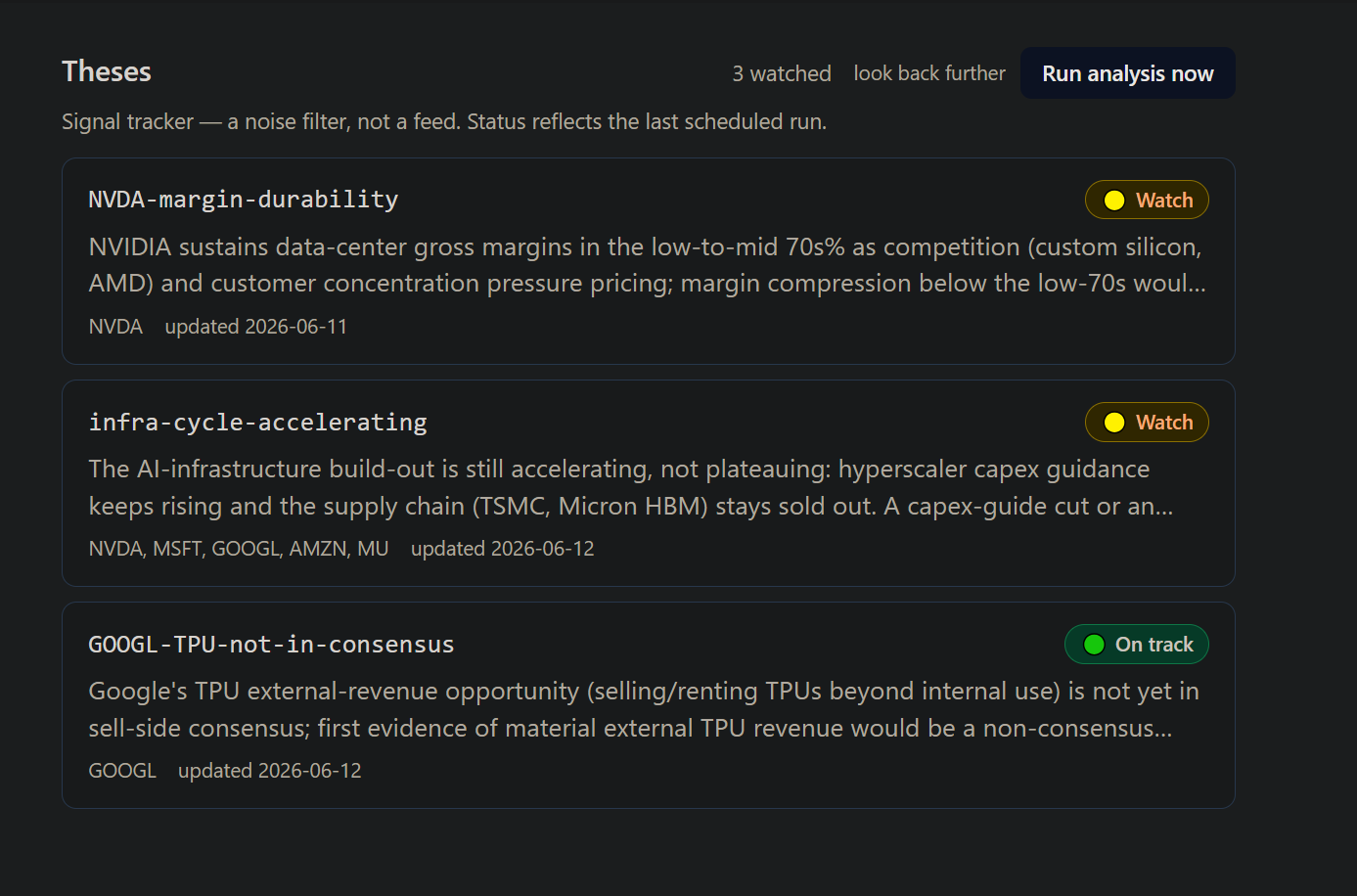
What it doesI encode a thesis per position: the kind of claim that, if it broke, would change my mind. A daily job watches for new filings, transcripts, and signals, uses an LLM to judge whether anything materially moves a thesis, and sends a concise email digest. A remote trigger lets me kick off a run from my phone.
OutcomeIt converts a vague intention to "keep up with my positions" into a specific, low-noise feed of thesis-relevant change. It also shares its core infrastructure with stock-vetter, so the two compound.
Architecture
signal-tracker is a thesis-change detector that runs unattended on a daily schedule. It shares the packages/core infrastructure with stock-vetter — the same SEC-filing fetchers, transcript ingestion, and Turso persistence — and adds a thesis layer and a change-detection pass on top.
  [GitHub Actions cron — daily]
            │
            ▼
  [packages/core] ── fetch latest filings / transcripts ──► [Turso]
            │
            ▼
  [thesis engine] ── per-position thesis + new evidence ──► [LLM judge]
            │                                                    │
            │              materially moves a thesis? ───────────┘
            ▼
  [digest builder] ──► [Resend email] + [web viewer]
            ▲
  [remote trigger] (phone) ──► on-demand run
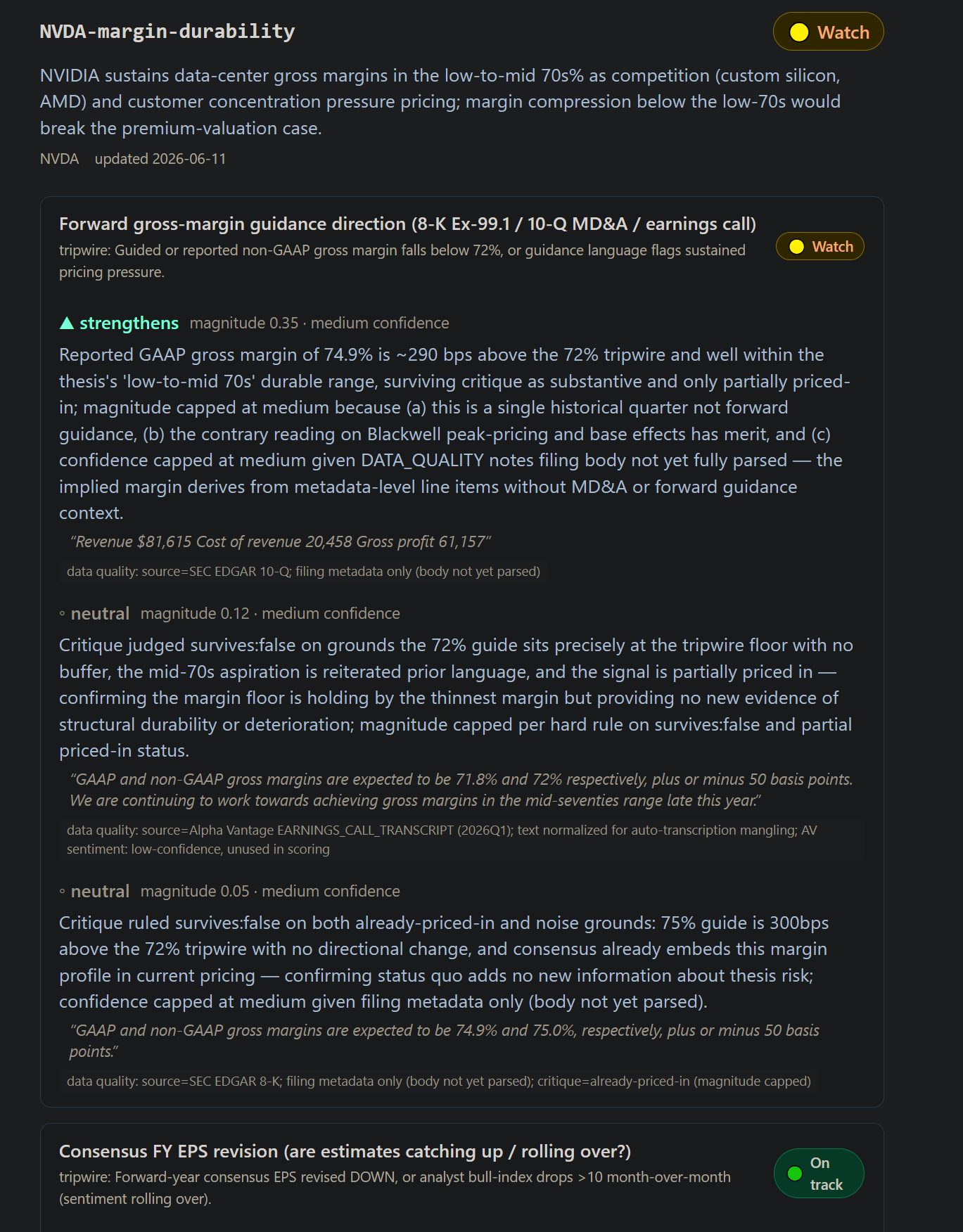
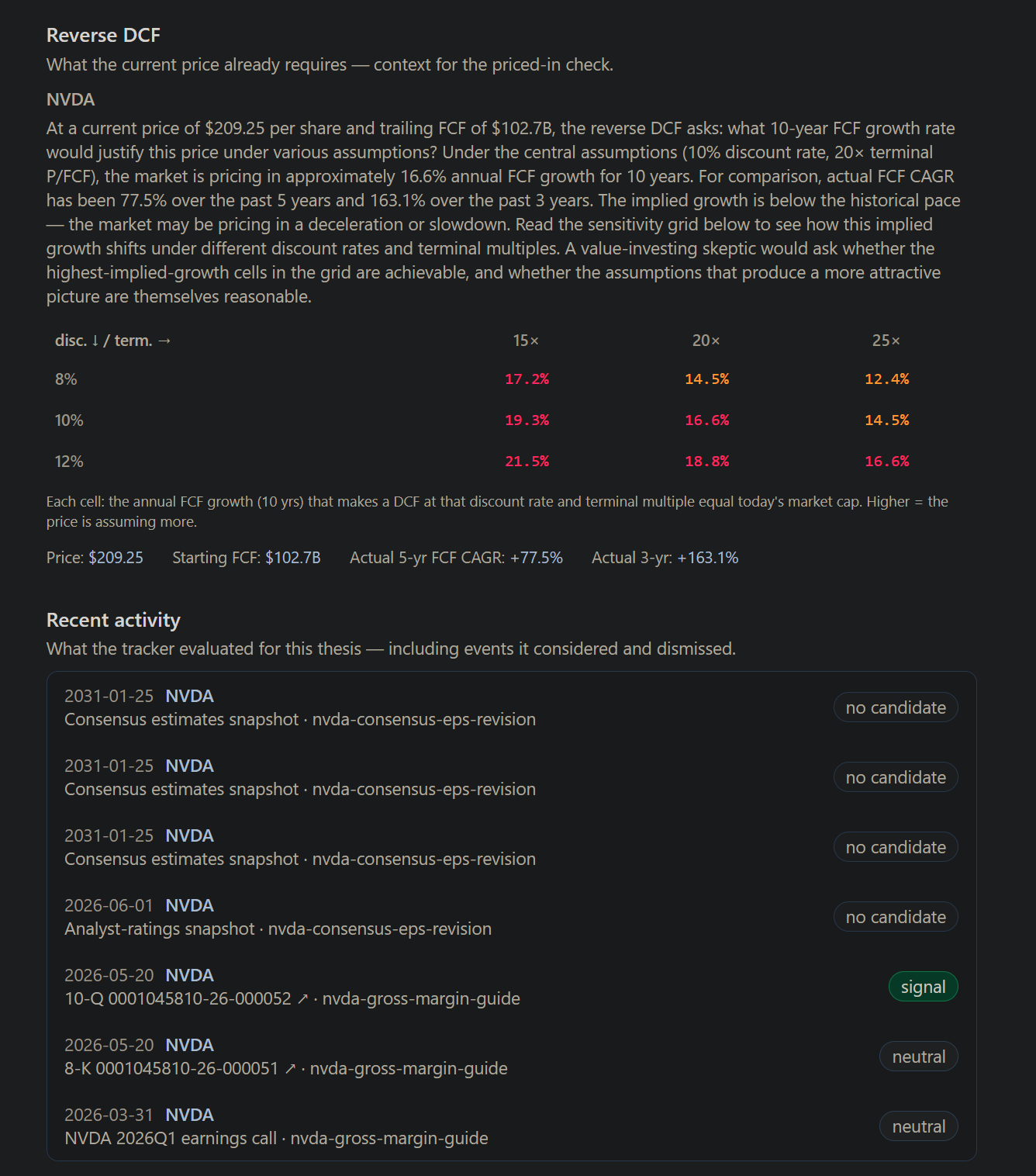
Each holding has a written thesis — a falsifiable claim that, if broken, would change the decision. The daily job diffs the latest primary-source material against each thesis and asks an LLM to classify whether anything materially confirms or challenges it, then emits a low-noise digest rather than a raw news feed.
Technical decisions
Shared core over a separate codebase
reusing stock-vetter's packages/core meant filing-fetch, parsing, and persistence were already battle-tested, so signal-tracker is mostly the thesis + diff logic. The two tools compound instead of duplicating.
Thesis as falsifiable text, not a rule engine
encoding a thesis as a plain-language claim the LLM evaluates (vs hardcoded numeric triggers) captures qualitative shifts — a changed risk factor, a softened guidance tone — that threshold rules miss.
Change-detection, not summarization
the job's job is to stay silent. It only surfaces material thesis movement, which is what makes a daily email survivable long-term.
Cron + remote trigger
GitHub Actions runs the daily pass for free and verifiably; a remote trigger lets me force a run from my phone when news breaks.
What broke / what I learned
The hard part wasn't detection, it was noise. Early versions flagged too much — every minor filing change read as "movement." Tightening the judge toward materiality (and giving it the thesis as explicit context) is what turned it from a firehose into something I actually read. Sharing infrastructure with stock-vetter also meant its data-plumbing bugs were my bugs; fixing them once fixed both.